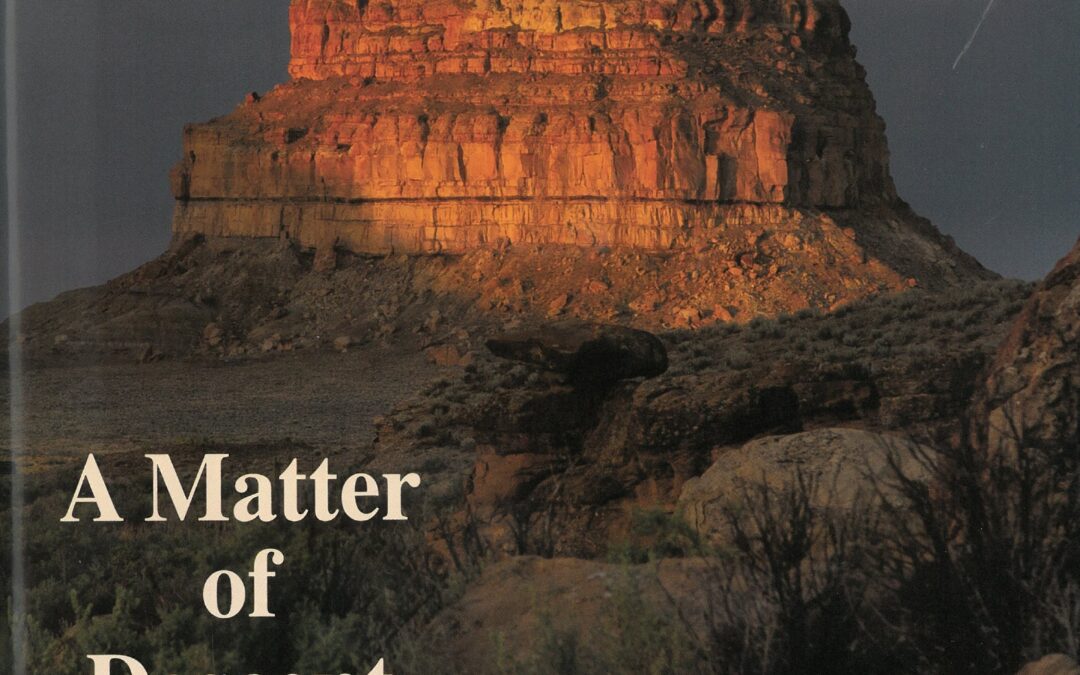
Pictured above: Cover of American Archaeology‘s Summer 2026 Edition
RGA is delighted to have our recent work at the Eden House Preserve in North Carolina prominently featured in the Summer 2026 issue of American Archaeology (Volume 30, No. 2, Page 46)! The article highlights how a collaborative, noninvasive approach is helping The Archaeological Conservancy better understand and steward a site long associated with Colonial-era governor Charles Eden and his family.
The Eden House Preserve is a 2.6-acre parcel on the Chowan River that has been linked through local tradition and limited surface finds to the former governor’s home, Eden House. Donated to The Archaeological Conservancy in 2000 by William and Wanda Bell, the site has long been recognized as historically significant but had not previously undergone formal investigations to pinpoint the location of Eden House. When North Carolina author Hoke Kimball, who is actively researching the homes of early Colonial governors, reached out to the Conservancy about the Eden House Preserve, it opened the door for a collaborative project that brought our team into the conversation.
Working closely with Kimball and the Conservancy, our staff conducted a noninvasive survey utilizing ground-penetrating radar (GPR). Because GPR surveys do not disturb the ground surface, it offered a way to explore the site’s components while preserving its integrity for future research. This past winter, a team led by Jenifer C. Elam, Principal Senior Archaeologist, combined archival research with a GPR survey of the entire parcel carried out by Donald Rowe, Senior Geophysical Archaeologist, to identify anomalies that could represent structural remnants and activity areas related to Governor Eden’s tenure on the property.
The GPR survey results have provided a useful framework for future research avenues at the Eden House Preserve. The survey identified 13 subsurface anomalies, including one large feature—approximately 62 by 44 feet—that stands out as a strong candidate for the Eden House foundation. Several additional anomalies appear consistent with yard surfaces or outbuildings dating to the site’s eighteenth-century occupation. While further work would be needed to confirm these interpretations, the data provide a much clearer sense of where key elements of the property may be located within the parcel.
For The Archaeological Conservancy, the project offers a practical planning tool as well as a better understanding of the potential cultural features within the site. The GPR results can help guide decisions about future research, public interpretation, and long-term management by highlighting areas of archaeological sensitivity. For RGA, our work at the Eden House Preserve is a meaningful example of how the noninvasive methods that we offer can support partners in balancing research goals with preservation concerns.
We are grateful to The Archaeological Conservancy and to Hoke Kimball for inviting us into this work and for their thoughtful collaboration throughout the project timeline. We are also honored that American Archaeology chose to spotlight this effort in its Summer 2026 issue and to share the story of how partnerships, archival research, and geophysical survey can come together to support informed stewardship of important historic sites!